Book Appointment Now

Specifications for Alumina Balls
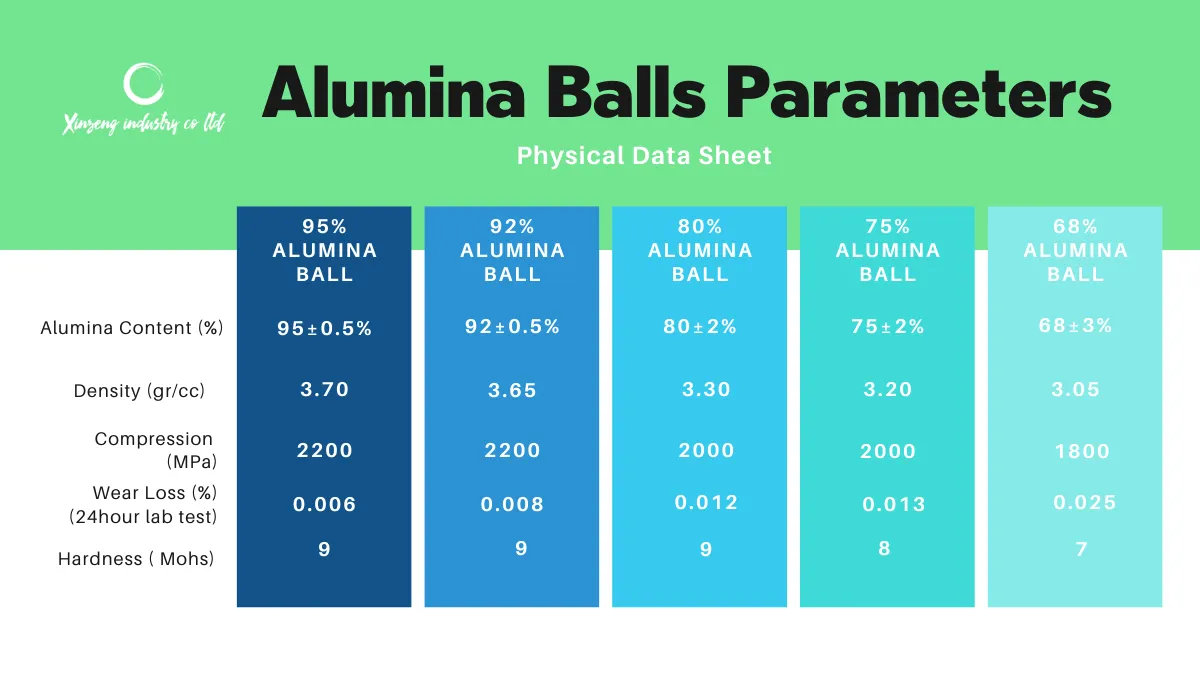
Alumina balls are essential components in various industrial processes, recognized for their exceptional durability, hardness, and resistance to wear. To ensure they meet the rigorous demands of different applications, it’s important to understand their Physical Properties and Mechanical Properties. These specifications are critical in determining the suitability of alumina balls for specific uses.
Physical Properties
The Physical Properties of alumina balls are key indicators of their performance and reliability in industrial settings. These include:
- Main Raw Material:
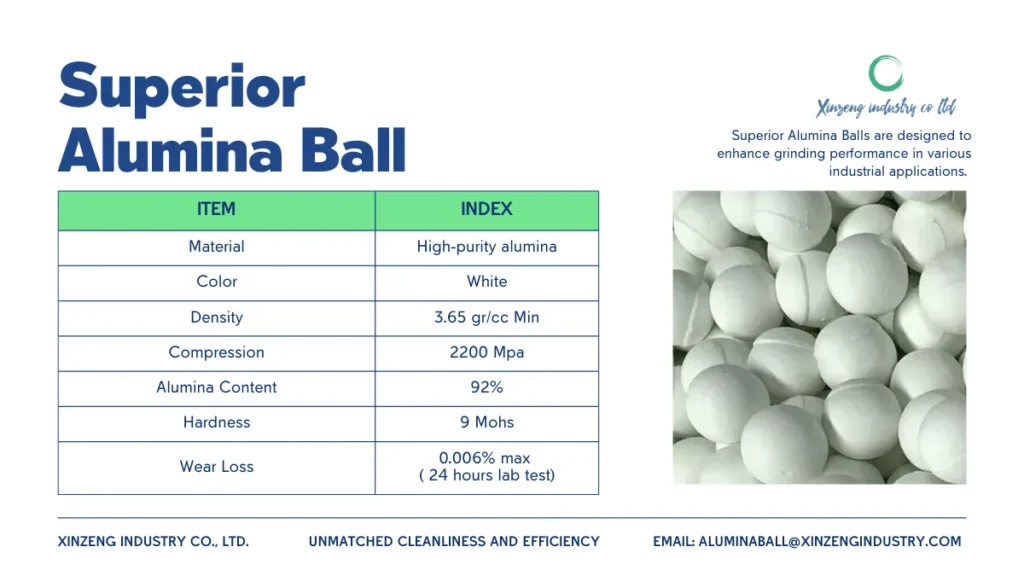
- Calcinate Alumina: The primary material used in the manufacturing of alumina balls, known for its high purity and stability. This ensures consistent quality and performance, making the balls suitable for demanding applications.
- Alumina Content (%):
- ≥ 92: A high alumina content is critical for ensuring the hardness and wear resistance of the balls. This level of purity makes them ideal for grinding and milling processes where long-lasting performance is required.
- Specific Weight (g/cm³):
- ≥ 3.65: The specific weight, or density, is a measure of how compact and solid the alumina balls are. A higher specific weight indicates that the balls are dense and durable, capable of withstanding the rigors of intense grinding operations.
- Colour:
- White: The typical white color of alumina balls is significant in applications where product purity is crucial. The white hue minimizes the risk of contamination in sensitive environments like pharmaceuticals and ceramics.
- Moh’s Hardness:
- 9: With a Moh’s hardness of 9, alumina balls are nearly as hard as diamonds. This extreme hardness ensures excellent resistance to abrasion and wear, making them ideal for high-wear applications.
Mechanical Properties
The Mechanical Properties of alumina balls determine their durability and effectiveness in high-stress industrial environments. Key mechanical properties include:
- Compressive Strength (Mpa):
- ≥ 2200: Alumina balls with a compressive strength of 2200 MPa or more can endure significant pressure without cracking or deforming. This makes them suitable for applications such as high-pressure grinding, where consistent performance under stress is essential.
- Wear Resistance:
- High Durability: Thanks to their high alumina content and hardness, these balls offer excellent wear resistance, which translates into a longer operational life and reduced maintenance costs. This property is particularly valuable in continuous industrial processes where downtime needs to be minimized.
Conclusion
Understanding the specifications for alumina balls is crucial for ensuring they meet the specific requirements of your industrial processes. With Calcinate Alumina as the Main Raw Material, an Alumina Content (%) of ≥ 92, a Specific Weight (g/cm³) of ≥ 3.65, and a Compressive Strength (Mpa) of ≥ 2200, these balls are designed for high performance. Their White Colour and Moh’s Hardness of 9 further solidify their role as essential components in environments where durability, purity, and wear resistance are paramount.